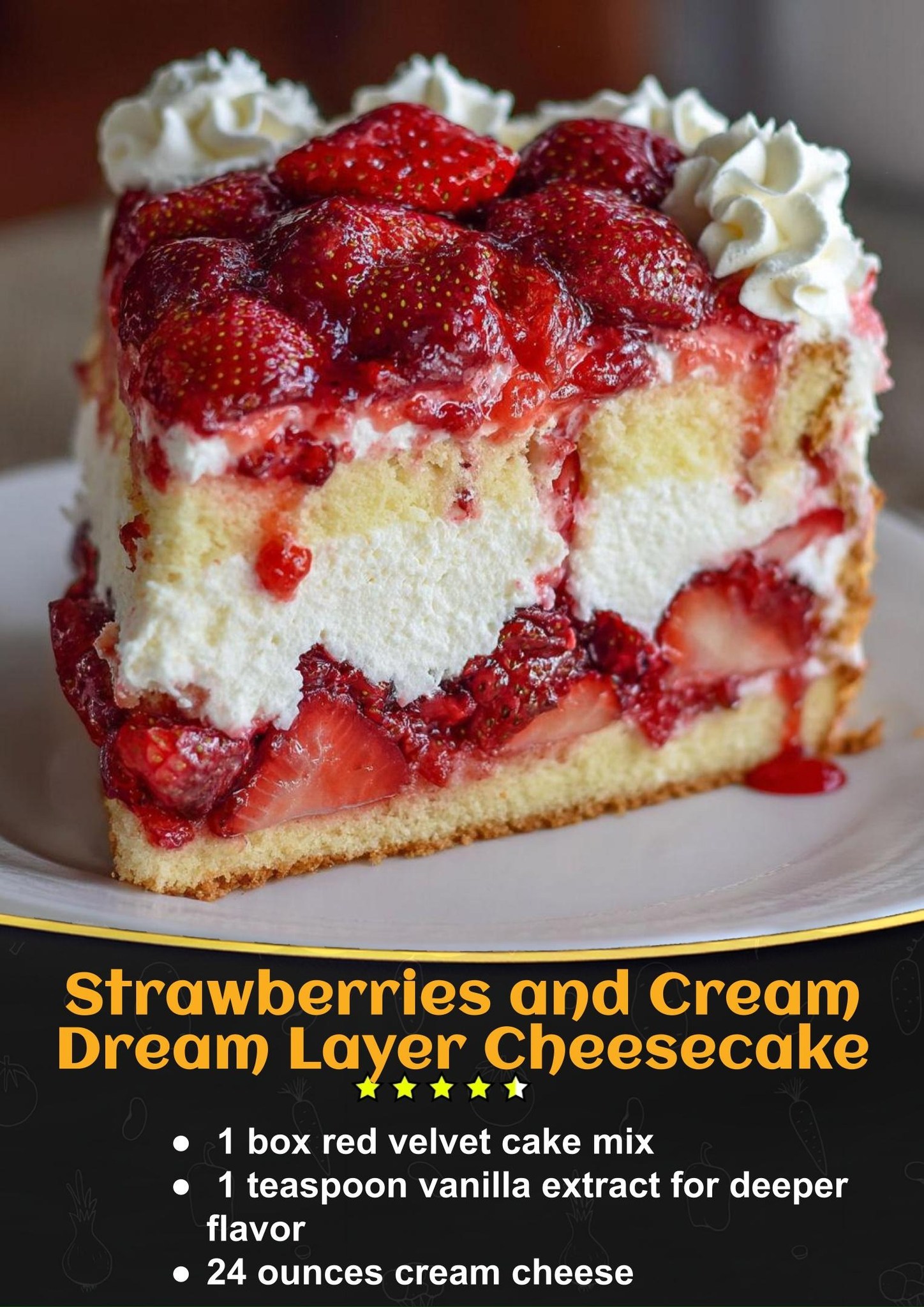
Now, for the careful part. I pour this luscious cream cheese filling over the warm red velvet base. This was a game-changer I discovered. Pouring it onto a completely cold cake base caused the layers to separate cleanly. Pouring it onto a warm base lets them fuse just slightly, making the cake more stable when sliced. I smooth the top, then tap the pan firmly on the counter to release any air bubbles. I bake it until the edges are set but the center still has a slight, gentle jiggle—like Jell-O.
While the cheesecake layer bakes and then cools completely (for a full 2 hours at room temp, then in the fridge), I prepare the toppings. I slice my strawberries, toss them with the two tablespoons of sugar, and let them sit. They create a gorgeous, shiny syrup. Right before serving, I whip the cold heavy cream with powdered sugar and vanilla to stiff peaks. I spread this cloud-like cream over the chilled cake, top with the glistening strawberries and all their juice, and take a moment to admire my creation before the first glorious slice is cut.
Pro Tips for Best Results
I tested the cheesecake layer three different ways: with cold cream cheese, partially softened, and fully softened. Fully softened, room-temperature cream cheese is non-negotiable. Cold cream cheese will never become smooth, leaving you with a lumpy filling no matter how long you mix. I leave mine out on the counter for at least 3 hours, or overnight in a cool kitchen.
Here’s what I learned the hard way about the eggs: they must be at room temperature. Adding cold eggs to the creamy cheese mixture can re-solidify the fat, leading to a chunky texture. I place my eggs in a bowl of warm water for 10 minutes before cracking them. Also, mix them in on low speed and just until combined. Over-beating incorporates too much air, which expands during baking and then collapses, creating cracks and a puffy, then sunken, top.
For the cleanest slices, I employ a two-step method. First, I run a thin knife under very hot water, wipe it dry, and make a cut. I repeat this for every single slice—hot knife, clean wipe. It melts through the cream cheese layer cleanly. Second, I serve slices with a sturdy cake server or pie wedge to support the heavy layers as you lift them from the pan. A flimsy spatula will cause the layers to slide apart.
Common Mistakes to Avoid
My biggest first-time mistake was not letting the cream cheese soften enough. I was impatient and figured 30 minutes out of the fridge was fine. I ended up with tiny, stubborn lumps of cream cheese throughout my baked layer that no amount of mixing could fix. Now, I plan ahead. Truly soft cream cheese should feel like very thick whipped cream almost.
Another common error is over-baking the cheesecake layer. It continues to cook as it cools. If you bake it until the center is completely firm in the oven, it will be dry and crumbly once chilled. You want the edges puffed and set, but the center (about a 3-inch circle) should have a slight, gentle jiggle when you tap the pan. It will firm up perfectly as it cools.(See the next page below to continue…)