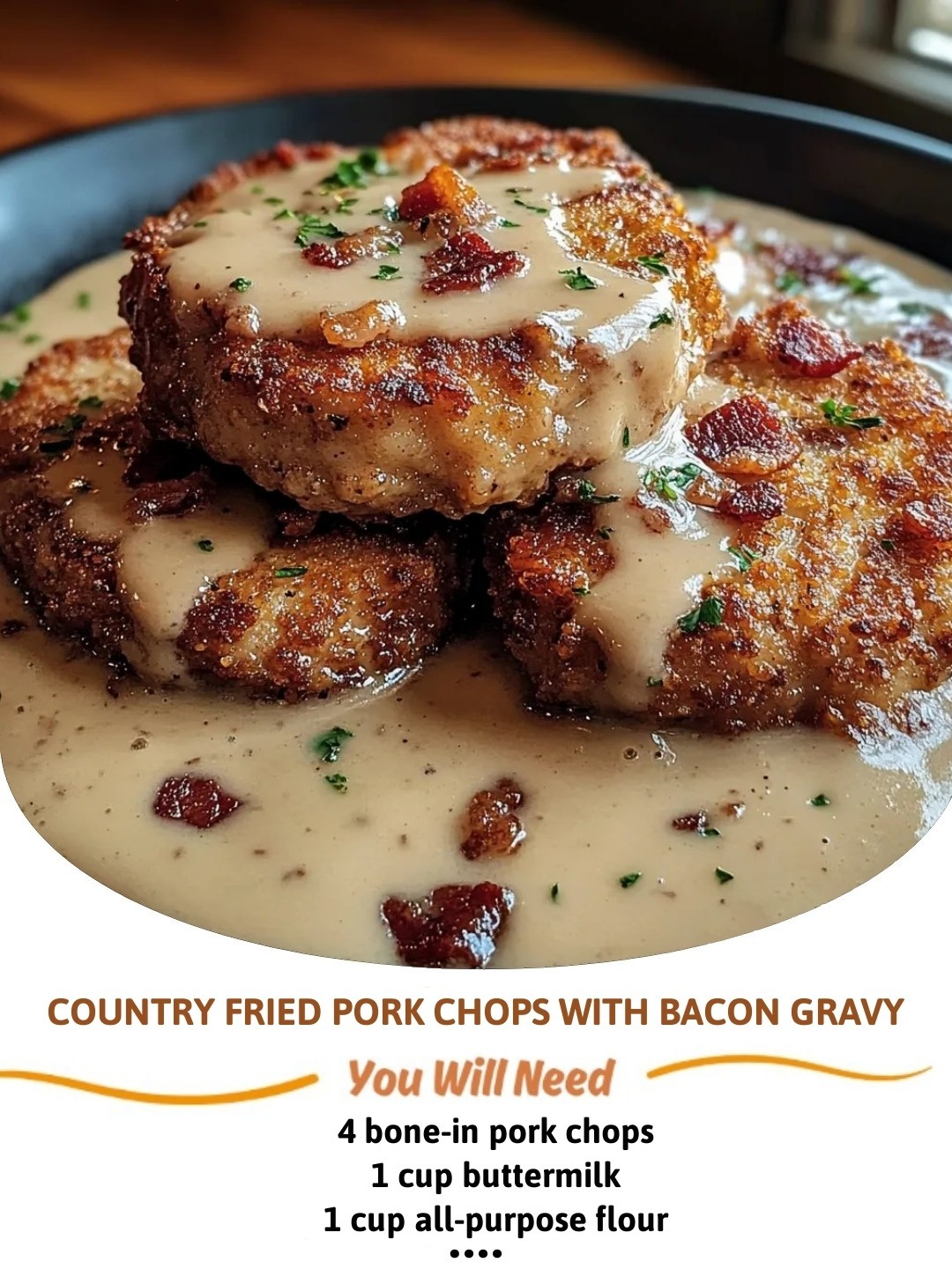
Now, for the pork chops. I remove a chop from the buttermilk, let the excess drip off, and then dredge it thoroughly in the seasoned flour, pressing to make sure the coating adheres well. I place it on a wire rack while I repeat with the remaining chops. I add enough vegetable oil to the bacon fat in the skillet to have about ½ inch of frying fat and heat it over medium-high until it shimmers. Carefully, I add the pork chops—don’t crowd the pan; I do two at a time. The sound of that sizzle is music. I fry them for about 4-5 minutes per side, until they’re a deep, golden brown and cooked through. I transfer them to a clean wire rack set over a sheet pan to keep them crisp while I make the gravy.
With the pork chops resting, I make the gravy in the same skillet with all those delicious browned bits. I sprinkle the ¼ cup of flour over the warm bacon fat and oil. Using my whisk, I cook this roux for a minute or two until it’s a light golden brown and smells nutty. Then, I slowly pour in the warmed milk, whisking constantly to prevent lumps. The mixture will thicken beautifully as it comes to a gentle simmer. I let it bubble for 2-3 minutes until it’s silky and coats the back of a spoon. I stir in most of the reserved crispy bacon, season with salt, pepper, and a pinch of cayenne if I want a little heat. The gravy is now ready to pour generously over the crispy pork chops.
Pro Tips for Best Results
I’ve tested the buttermilk soak three different ways: 15 minutes, 30 minutes, and overnight. Thirty minutes at room temp is the sweet spot. It tenderizes effectively without starting to “cook” the meat in the acid, which can happen with a longer soak. If you need to prep ahead, you can soak them in the fridge for up to 4 hours, but let them come to room temp for 30 minutes before frying.
Here’s what I learned the hard way about the frying temperature: if the oil isn’t hot enough, the breading will absorb oil and become greasy. If it’s too hot, the outside will burn before the inside cooks. I use the “breadcrumb test.” I drop a tiny pinch of the seasoned flour into the oil; if it sizzles immediately and floats, it’s ready. Maintaining a consistent medium-high heat is key for that perfect, crunchy, non-greasy crust.
For the gravy, warming the milk before adding it to the roux is a game-changer I learned from my mom. Adding cold milk to a hot roux can cause it to seize and become lumpy. I just microwave the milk for 90 seconds. Adding it warm ensures it incorporates smoothly and thickens evenly into the most luxurious, lump-free gravy every single time.
Common Mistakes to Avoid
My biggest first-time mistake was moving the pork chops too soon after placing them in the hot oil. I was nervous and poked at them, which caused the beautiful crust to tear and stick to the pan. You must let them fry undisturbed for a full 3-4 minutes to allow a solid crust to form. When it’s ready, it will release from the pan easily when you lift it with tongs.
Another error is overcrowding the skillet. I tried to fry all four chops at once to save time. The temperature of the oil plummeted, the chops steamed, and I ended up with pale, greasy breading. Frying in batches is not optional for perfect results. It keeps the oil temperature stable and ensures each chop has plenty of room to become gorgeously crisp.(See the next page below to continue…)