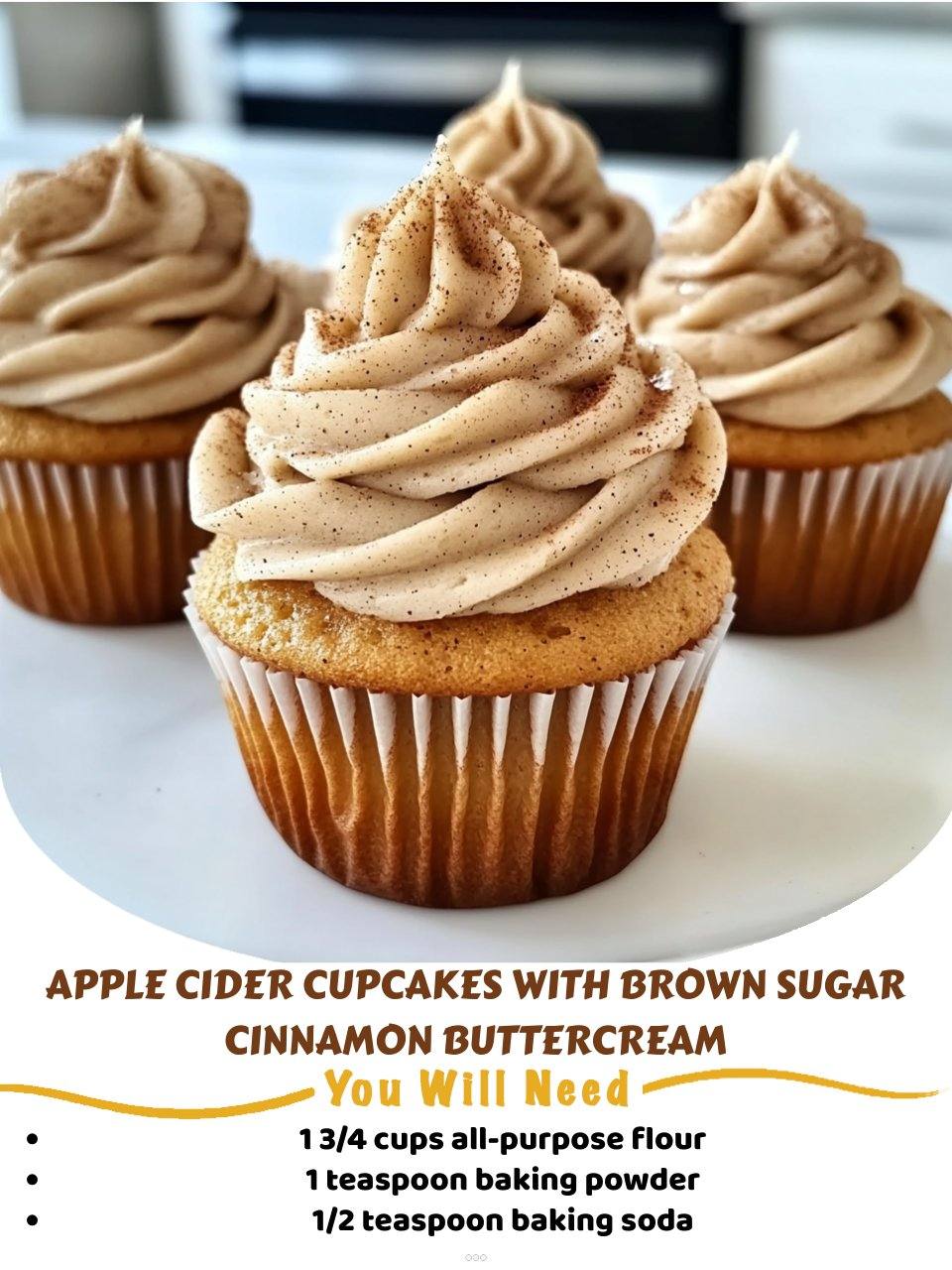
Do not use cold butter for your buttercream. I made this error once when I was in a hurry. Cold butter will never incorporate properly with the sugar, leaving you with a lumpy, curdled-looking mess that’s impossible to smooth out. Your butter should be soft enough that you can easily press a finger into it and leave a deep indent. I now set mine out a good 2-3 hours before I plan to bake.
Finally, the most common frosting error: adding too much liquid too soon. I once poured in all the cream at once when my powdered sugar wasn’t fully incorporated. The frosting became a sloppy, runny mess, and I had to add almost double the powdered sugar to save it, making it sickeningly sweet. Always add your liquid one tablespoon at a time, with the mixer running, and stop the moment the frosting looks smooth, creamy, and holds a peak.
Serving Suggestions
I love serving these cupcakes at room temperature so the flavors of the spices and brown sugar are at their peak. They look stunning arranged on a simple wooden board or a tiered cake stand, especially if you’ve used a piping bag for that classic bakery swirl. For an extra festive touch, I’ll sometimes stick a thin apple slice or a small cinnamon stick into the buttercream as a garnish.
For a dessert pairing, these are sublime with a hot mug of coffee, black tea, or even a small glass of cold milk. The richness of the buttercream is perfectly cut by the bitterness of coffee. If you’re feeling extra indulgent, a scoop of vanilla bean ice cream on the side turns a cupcake into a decadent, shareable sundae.
When I bring them to a party or potluck, I always make a little sign that says “Apple Cider Cupcakes.” It sparks conversation and lets people know this isn’t just any spice cupcake—it has that special reduced cider magic inside. They are always one of the first desserts to disappear, and I’m constantly asked for the recipe.
Variations & Customizations
For a delightful textural contrast, try folding ½ cup of finely chopped, toasted pecans or walnuts into the cupcake batter. The nuttiness pairs wonderfully with the warm spices. You could also add ½ cup of finely diced, peeled apple (like Granny Smith) for little pockets of fresh apple flavor and a soft bite. I’ve tried this, and it adds a lovely moisture and authenticity.
If you’re a caramel lover, a drizzle is a game-changer. After frosting the cupcakes, I’ll warm up some store-bought or homemade caramel sauce and drizzle it artfully over the buttercream swirl. Adding a tiny pinch of flaky sea salt on top of the caramel creates an incredible sweet-salty-spiced combination that is truly unforgettable.
For a different frosting, you can transform the buttercream into a cinnamon cream cheese frosting. Replace one stick of the butter with 8 ounces of softened full-fat cream cheese. Add it after the butter and brown sugar are creamed. The tang from the cream cheese balances the sweetness beautifully. I’ve also made a maple version by replacing the vanilla extract in the frosting with pure maple syrup and using maple sugar with the brown sugar—it’s autumn in a bite.
How to Store, Freeze & Reheat
Unfrosted cupcakes store beautifully. Once completely cool, I place them in a single layer in an airtight container at room temperature for up to 2 days. If you need to stack them, place a sheet of parchment paper between layers. Frosted cupcakes are best stored in the refrigerator in an airtight container because of the dairy-based buttercream. They’ll keep for up to 3 days. Let them sit at room temperature for 30 minutes before serving to take the chill off and soften the frosting.
Yes, you can freeze these! For the best results, I freeze the unfrosted cupcakes. I wrap each cooled cupcake individually in plastic wrap, then place them all in a large freezer bag. They’ll keep for up to 3 months. Thaw overnight in the refrigerator or for a few hours on the counter. I make the buttercream fresh when I’m ready to serve. You can also freeze frosted cupcakes: place them on a tray until the frosting is solid, then wrap individually and bag. The frosting texture may change slightly upon thawing, but they’ll still taste wonderful.
“Reheating” isn’t typical, but if you want to enjoy a cupcake warm, you can gently microwave an unfrosted one for 8-10 seconds. It will make it incredibly soft and fragrant, almost like it’s fresh from the oven. Then, you can add a dollop of frosting. I don’t recommend microwaving a frosted cupcake, as the buttercream will melt into a puddle. For the best experience, I always think of them as a room-temperature treat.
Conclusion
Baking these Apple Cider Cupcakes is like bottling the very best part of autumn. The process is as comforting as the result, from the scent of simmering cider to the joy of swirling on that spiced brown sugar buttercream. They’ve become my go-to treat for sharing fall cheer with friends, family, and neighbors. I hope this recipe finds a special place in your seasonal traditions, bringing warmth and deliciousness to your table. Now, go find that apple cider—your kitchen is about to smell like happiness. Happy baking